

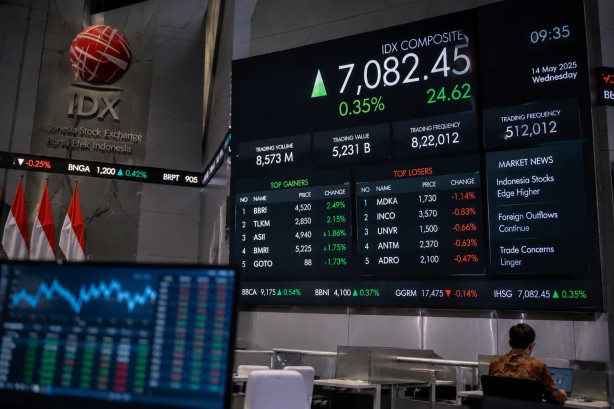
During the week ending July 24, Indonesia’s Jakarta Composite Index (JCI) experienced a 0.34% increase. This upward movement was driven by robust trading activity, despite facing challenges from ongoing foreign investor withdrawals and a backdrop of global economic uncertainty. The Indonesia Stock Exchange saw its market capitalization climb to Rp 10,870 trillion, with the average daily trading turnover jumping 41% to reach Rp 19.76 trillion. Despite these positive indicators, foreign investors continued to sell off Indonesian assets, accumulating a net outflow of Rp 79.09 trillion for the year, indicative of a cautious outlook.
The market faced pressure from various external factors, notably the escalating global oil prices which were influenced by rising tensions in the Middle East. Additionally, new tariffs imposed by the United States on imports from several trading partners, including a 10% tariff on certain Indonesian goods, added to the market’s concerns. These developments contributed to an atmosphere of uncertainty, impacting investor confidence and market dynamics.
While the economic landscape presented challenges, Indonesia’s Finance Ministry remained optimistic about the country’s fiscal health. Officials acknowledged that the surging oil prices could exert additional pressure on the 2026 state budget. However, they reassured that Indonesia’s overall fiscal position remains stable, suggesting a degree of resilience in the face of external economic pressures.
This period of market fluctuation highlights the complexities facing Indonesia’s financial markets, as they navigate both internal conditions and international economic developments. The combination of increased trading activity and foreign investor caution reflects a nuanced economic environment that requires careful monitoring and strategic response.