

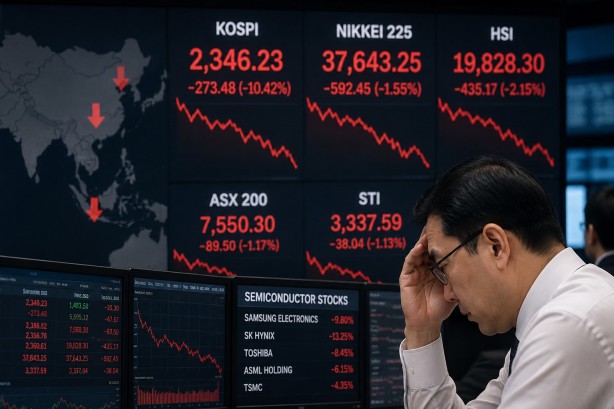
In a turbulent session for Asian stock markets, South Korea’s Kospi index took a significant hit, plummeting over 10% on Tuesday. This downturn was primarily driven by steep declines in semiconductor stocks, notably Samsung Electronics and SK Hynix, both of which saw their shares drop by approximately 12%. The market’s anxiety was heightened by the prospect of intensified competition from Chinese artificial intelligence startups and chipmakers, which could potentially impede the expansion of the global AI industry.
The ripple effect of South Korea’s market slide was felt across the region, with several major Asian indexes closing in the red. Japan’s Nikkei, Taiwan’s Taiex, Hong Kong’s Hang Seng, and China’s Shanghai Composite all registered losses. In contrast, Australia’s S&P/ASX 200 stood out as the lone major regional index to post gains, offering a rare bright spot amid widespread declines.
Beyond the stock market turmoil, the global oil market also experienced fluctuations. Oil prices saw a decrease, influenced by easing tensions between the United States and Iran. This development spurred hopes for the revival of diplomatic discussions, which in turn alleviated worries about the stability of global energy supplies.
Investors are closely monitoring these developments, particularly the implications of increasing competition in the technology sector and its impact on market dynamics. The semiconductor industry, a key driver of technological innovation, finds itself at the center of these concerns, as shifts in competitive landscapes could have far-reaching consequences.
As markets continue to react to these evolving factors, the focus remains on how geopolitical and industrial shifts will play out in the coming days. The situation underscores the interconnectedness of global economies and the delicate balance of market forces that investors must navigate.