

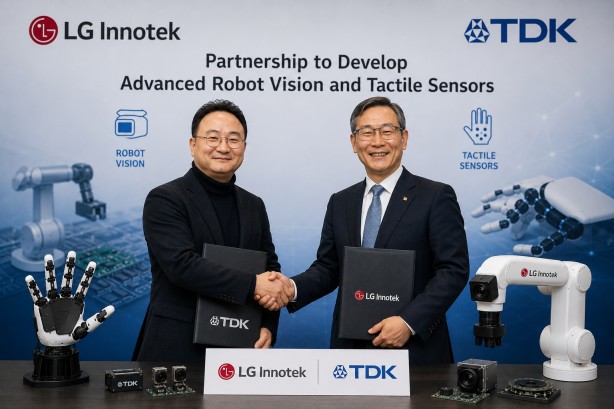
In a strategic move to advance the field of robotics and physical AI, South Korea’s LG Innotek has joined forces with Japan’s TDK. This collaboration aims to create cutting-edge vision and tactile sensing modules by merging LG Innotek’s strengths in optical and precision engineering with TDK’s expertise in sensor technology. The partnership represents a significant step forward in equipping robots with enhanced capabilities to interact with their environments.
One of the first fruits of this collaboration is a vision sensing module that is set to debut in 2027. This module will feature an inertial sensor and is designed to integrate visual, motion, direction, and auditory data. Such integration is intended to help robots perceive and respond more effectively to their surroundings while minimizing image distortion that often occurs during movement. This advancement is poised to refine how robots process and interpret their environments, contributing to more seamless operations.
In addition to the vision sensing module, LG Innotek and TDK are working on developing a tactile sensing module. Scheduled for completion in 2027 as well, this module is designed to mimic human skin. It will enable robots to sense touch and pressure across their hands, arms, and bodies, thereby enhancing their ability to perform tasks that require delicate manipulation and physical interaction. This development is critical in advancing robotics applications that require a nuanced understanding of touch.
Through this partnership, LG Innotek aims to bolster its presence in the rapidly expanding robotics market. By broadening its array of AI sensing technologies—which already includes cameras, lidar, radar, and tactile sensors—the company is positioning itself as a key player in the industry. The collaboration with TDK not only highlights the potential of combining expertise from different technological domains but also underscores the growing importance of AI-driven sensing solutions in the future of robotics.