

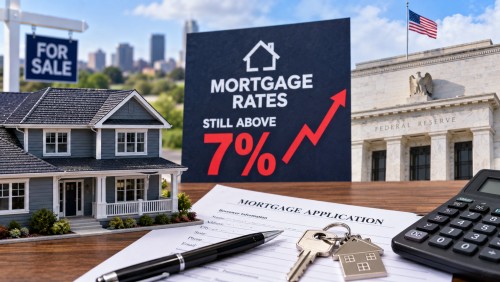
In the wake of the Federal Reserve’s latest decision to raise interest rates, mortgage rates in the United States continue to hover above the 7% mark, presenting increased borrowing costs for potential homebuyers. The Fed’s recent adjustment saw the target interest-rate range increase to 3.75%–4%, as the central bank aims to combat persistent inflation, which remains above its 2% target.
Despite the Fed’s rate hike, mortgage rates do not directly align with these policy changes. Factors such as financial markets, inflation expectations, and investor demand also play a significant role in influencing these rates. As of September 17, 2026, the average 30-year mortgage rate in the U.S. was reported at 7.37%, marking a substantial rise from 5.75% in March. Concurrently, the average 15-year mortgage rate stood at 6.62%, further impacting monthly payments for prospective homebuyers.
For borrowers, securing a mortgage rate below the national average remains possible, contingent upon factors like credit score, down payment, lender, and loan terms. Some may choose to pay mortgage points upfront to reduce their interest rate, notwithstanding the increased closing costs. Adjustable-rate mortgages provide an alternative, though their rates are subject to change after an initial fixed period.
Refinancing options have also become pricier, with the average 30-year refinance rate at 7.41% and the 15-year refinance rate at 6.75% as of the same date. This shift makes refinancing less appealing for homeowners with existing mortgages at lower rates, unless potential savings justify the associated costs.
The trajectory of future mortgage rates will largely depend on ongoing inflation trends, economic conditions, financial market responses, and anticipated Federal Reserve policy decisions. While some may hope for a decrease in rates, there is no certainty that waiting will yield lower borrowing costs, making the decision to buy or refinance a nuanced consideration in today’s economic climate.