

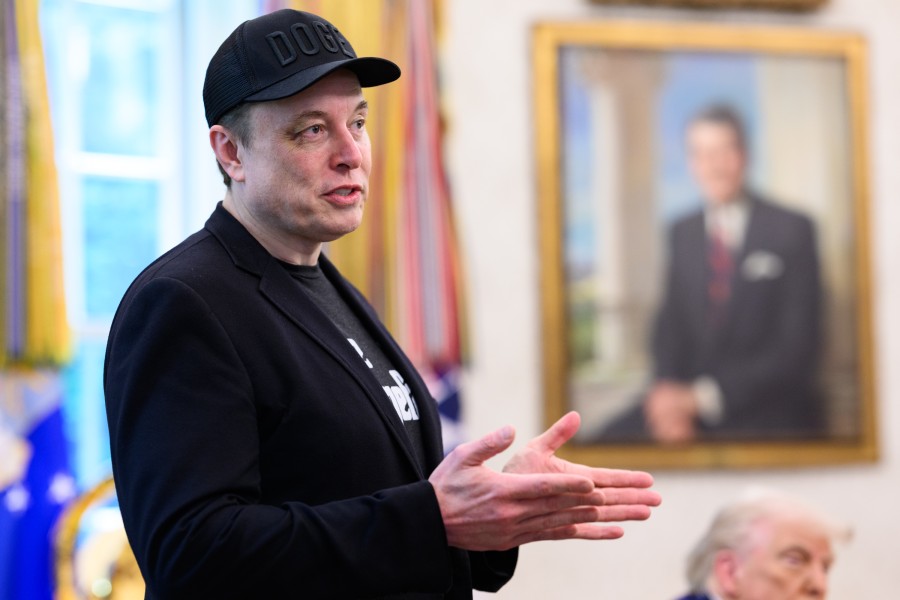
Elon Musk has seen a significant reduction in his wealth, falling below the coveted trillionaire status due to a decrease in the stock values of Tesla and SpaceX. Despite this dip, Musk still holds the title of the world’s richest person. Musk’s ascent to trillionaire status was largely propelled by SpaceX’s impressive stock market debut, which dramatically increased the value of his holdings. This surge in market performance initially boosted his net worth beyond the trillion-dollar threshold, with his wealth intricately linked to his stakes in his business ventures.
The downturn in Musk’s wealth can be attributed to a broader decline in the technology sector, impacting major companies, especially those associated with artificial intelligence. Growing concerns over interest rates, coupled with market uncertainty and worries about a potential slowdown in AI investment, have played a role in driving down share prices. Musk’s financial standing is heavily reliant on the market value of his company stocks and equity, meaning that fluctuations can swiftly affect his estimated fortune.
However, a rebound in the share prices of Tesla or SpaceX could once again elevate Musk’s net worth beyond the trillion-dollar mark. The volatility of the stock market and its impact on Musk’s wealth underline the inherent risks associated with having the majority of one’s wealth tied to market-dependent assets. Nonetheless, Musk’s financial dominance remains unchallenged, with his fortune still significantly outpacing other billionaires.
Musk’s wealth continues to be closely tied to the performance of his companies, as well as their potential for future growth. His position as the world’s richest person remains secure despite the recent downturn, thanks to the ongoing success and expansion of his business interests. The fluctuations in his wealth highlight the dynamic nature of stock market investments and their influence on the fortunes of high-profile entrepreneurs like Musk.