

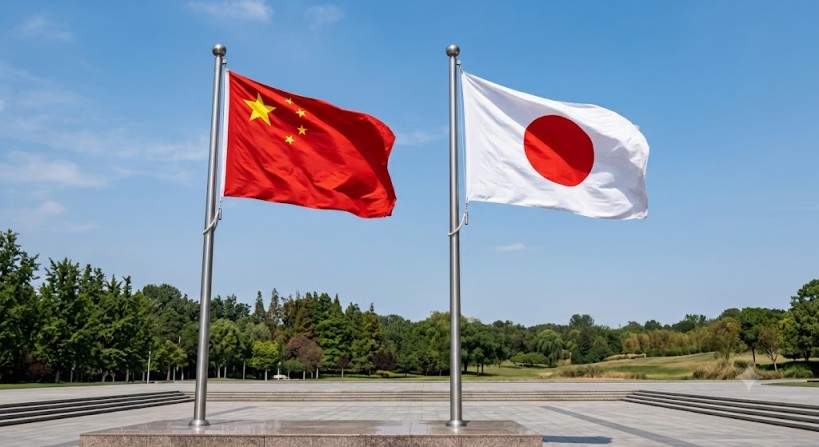
Beijing has introduced new export restrictions on 40 Japanese entities, citing their alleged role in bolstering Japan’s military prowess and efforts towards “remilitarization.” These controls specifically target 20 Japanese companies and divisions, including branches of major firms, by prohibiting the sale of certain dual-use goods that have both civilian and military applications by Chinese and foreign exporters.
Additionally, another 20 Japanese entities have been placed under a watch list. This requires exporters to obtain special permissions, provide risk assessments, and ensure that their products are not intended for military use. China’s government justified these measures as necessary to curb Japan’s growing military ambitions. Concerns have been voiced by Beijing over Japan’s enhancement of its defense capabilities, particularly the development of long-range weaponry and its increased security alliances with other nations.
In response, Japan has denounced the export controls as unacceptable, urging China to rescind the measures. Japanese authorities have indicated plans to evaluate the consequences of these restrictions and are contemplating suitable counteractions. The friction between the two nations has escalated following Japan’s expansion of its defense strategy and reinforcement of its military capacity. China’s disapproval has been particularly pronounced towards Japan’s security policies concerning Taiwan.
Experts suggest that these restrictions may serve as a diplomatic warning rather than a comprehensive economic strategy. However, the relationship between China and Japan continues to be delicate amid broader regional security challenges. Despite the targeted nature of these measures, the underlying tensions reflect deeper strategic disagreements and competitive dynamics in the region.