

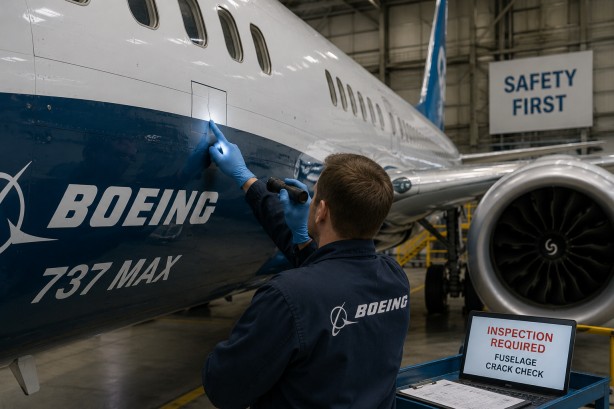
The Federal Aviation Administration (FAA) has mandated that airlines with Boeing 737 Max jets conduct inspections for potential cracks in a critical fuselage component. This directive affects about 471 aircraft, with inspections slated to commence in September. The focus of these inspections is on the bear strap, a structural component that reinforces the fuselage near the exit doors. This issue is not unprecedented as similar cracks have been found in older Boeing 737 Next Generation models, which previously led to a series of checks on those aircraft.
Currently, there have been no reports of cracks in the 737 Max fleet. However, given that the aircraft shares a similar design and manufacturing process with its predecessors, the FAA has highlighted the possibility of the same problem emerging. The concern is that if such cracks go undetected, they could compromise a significant structural component, potentially affecting the aircraft’s overall integrity.
Boeing has been proactive in addressing this issue since its identification in 2019. The company has been collaborating with airlines to support the mandated inspections. These checks are crucial for catching and rectifying any issues before they reach a critical stage. Boeing’s efforts are part of a broader response to continued scrutiny regarding the safety and manufacturing standards of the 737 Max line.
The demand for inspections comes amid ongoing oversight of the 737 Max, a model that has faced extensive examination following previous safety lapses. The aircraft had been grounded globally after two tragic crashes occurred in 2018 and 2019. These incidents have led to heightened vigilance over the plane’s engineering and manufacturing processes. The current inspections aim to reinforce safety measures and ensure the reliability of the fleet moving forward.